Imported renovation materials are not automatically cheaper once they are delivered, documented and installed in Australia. Compare an equivalent specification using the product price, transport, applicable import costs, local handling, installation, support and programme risks. An overseas factory quotation and an Australian installed quotation describe different scopes. This guide explains how to compare them without assuming a universal saving or duty rate.

The product price describes the specified goods within the seller’s agreed scope. A landed comparison adds the transport and other costs necessary to get those goods to the agreed destination. An installed comparison also addresses the local works required to put them into use. Confirm the commercial terms instead of assuming that a familiar price label includes every step.
The Australian Border Force’s importing-cost guidance explains that duties, taxes, exemptions and concessions can affect an import. Ask a qualified customs professional to determine the applicable treatment for the actual goods and transaction; this article does not calculate customs liability.
| Comparison stage | Items to establish | Why a gap matters |
|---|---|---|
| Specified product | Model, configuration, quantity, finish, accessories and packaging | A cheaper quote may describe a different item |
| Transport | Freight, insurance, loading and agreed delivery point | The seller’s price may end before your site |
| Import and handling | Applicable charges, agent services, unloading and local movement | The remaining costs may fall to the buyer |
| Installation | Preparation, fixings, connection, testing and making good | A supply price cannot be compared directly with an installed one |
| Support | Replacement parts, damage response and warranty responsibilities | Small defects can create disproportionate delay |
Ask the supplier to identify the delivery point and which party arranges each stage. Then ask the builder to identify the site services and works outside the supply quote. A responsibility gap can exist even when each party has accurately described its own price.
Record currencies and the date or mechanism used for any conversion. A comparison prepared at one exchange rate should not silently become a guaranteed future cost. Similarly, identify the quotation’s validity and the assumptions that apply to freight or other variable components.
Use the same product schedule and drawings for both proposals. Match dimensions, construction, finish, hardware, accessories, quantities and the required documentation. Clarify any substitution before adding the prices to a comparison sheet. Two products can look alike while needing different installation or maintenance arrangements.
The Australian Building Codes Board’s product-conformity guidance addresses products made both in Australia and overseas. The practical question is whether the actual product and its application are supported by relevant evidence. Manufacturing location alone does not answer it.
Ask the local installer whether the proposal has sufficient installation information and whether its scope includes the selected system. If the installer needs additional assessment, accessories or preparation, record the agreed allowance. Do not assume that a nominally similar product can simply be swapped into the original quote.
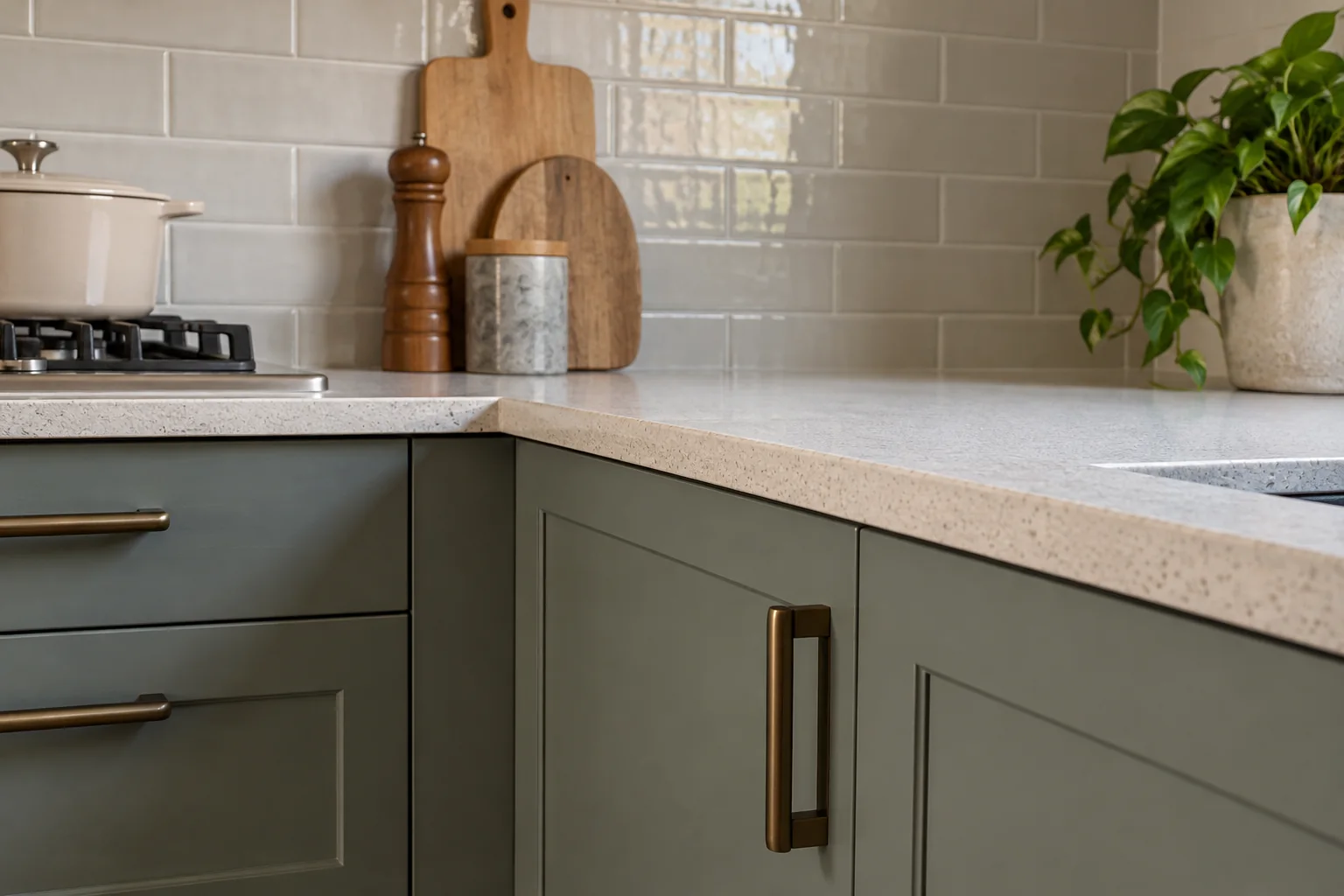
These fictional amounts demonstrate arithmetic only. They are not current quotations, market prices, tax calculations or a claim that imports deliver a particular saving. The two offers are assumed to match after specification review. All line items would need real project evidence in an actual decision.
| Illustrative line | Imported supply route | Local supply route |
|---|---|---|
| Specified goods | AUD 18,000 | AUD 25,000 |
| Transport and agreed handling | AUD 4,000 | AUD 1,000 |
| Illustrative import-related cost placeholder | AUD 3,000 | Not applicable to this comparison line |
| Local installation allowance | AUD 6,000 | AUD 5,000 |
| Comparison total | AUD 31,000 | AUD 31,000 |
The example shows why a lower goods price does not prove a lower installed total. It also does not prove that the two routes have equal risk, service or programme implications. Replace every placeholder with a supported quote or confirmed cost, and keep tax treatment consistent across the proposals.
Use a separate scenario for unresolved exposure. For example, ask what would happen if a damaged component needed remanufacturing or the site could not receive the delivery. Assign responsibility and identify an action that reduces the exposure. Do not add an arbitrary “risk percentage” and present it as a measured probability.
Consider dimensional certainty, documentation, lead time, replacement parts, access to support and the local team’s familiarity with the system. The relevant question is how each issue would affect this project. A spare part that is easy to store and replace presents a different planning question from a bespoke component that controls completion of a room.
The Your Home embodied-energy chapter encourages considering material impacts within a broader lifecycle context. Environmental value should therefore be assessed using relevant evidence and assumptions rather than inferred solely from a product’s purchase price or origin.
For a whole-project budget method, read the paired house renovation cost guide. This article focuses specifically on the supply-route comparison; the building project still needs a separate complete budget.
No. Compare the same specification through to delivery and installation, including applicable charges and agreed support. A lower product price may be offset by freight, handling, installation differences or unresolved responsibilities. Obtain project-specific quotations instead of assuming a universal percentage saving.
Not reliably without the transaction and product information needed for the applicable treatment. Use Australian Border Force guidance and consult a qualified customs professional. Do not apply a generic duty or tax assumption to every building product or purchasing arrangement.
No. Check the document’s scope, the actual product and its intended use with the responsible Australian project professionals. A report for a different configuration or application may not address your project. Keep the accepted evidence with the approved specification.
Only after adding the missing work and responsibilities consistently. Confirm preparation, transport, local handling, accessories, installation and aftercare. A comparison sheet should show each adjustment so the apparent saving is not created by excluding a necessary part of the project.
Provide the precise product schedule, drawings, quantities, finishes and delivery destination, plus the relevant documentation requirements. Ask for an explicit description of the supply and transport scope. Your local team should separately confirm installation, project suitability and works outside that quotation.
The sensible comparison is between equivalent, documented outcomes rather than two manufacturing prices. Build a complete supply-to-installation worksheet and keep uncertainty visible. Ask Forge for a scope-based materials quotation, then review its interfaces and exclusions with the local project team.

A practical Australian guide to choosing black garage tiles, including materials, grip, drainage, slab preparation, installation and maintenance.
2026-08-26
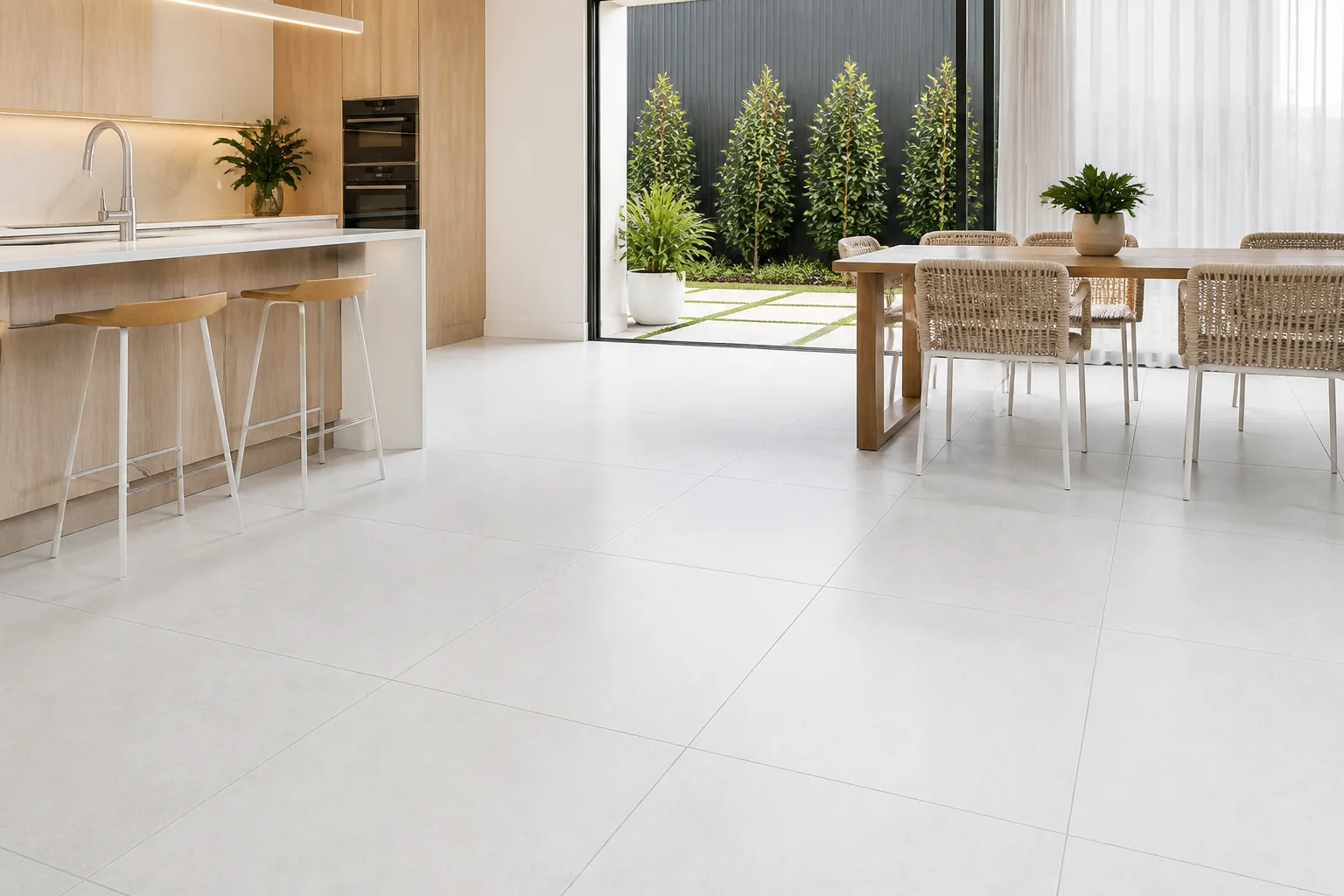
Choose white floor tiles by comparing undertone, finish, glare, grout, room use, slip, cleaning, layout, batch and maintenance requirements.
2026-09-02

Choose wood-look tiles by comparing plank size, graphic variation, finish, slip, stagger, grout, substrate, installation and cleaning.
2026-09-06
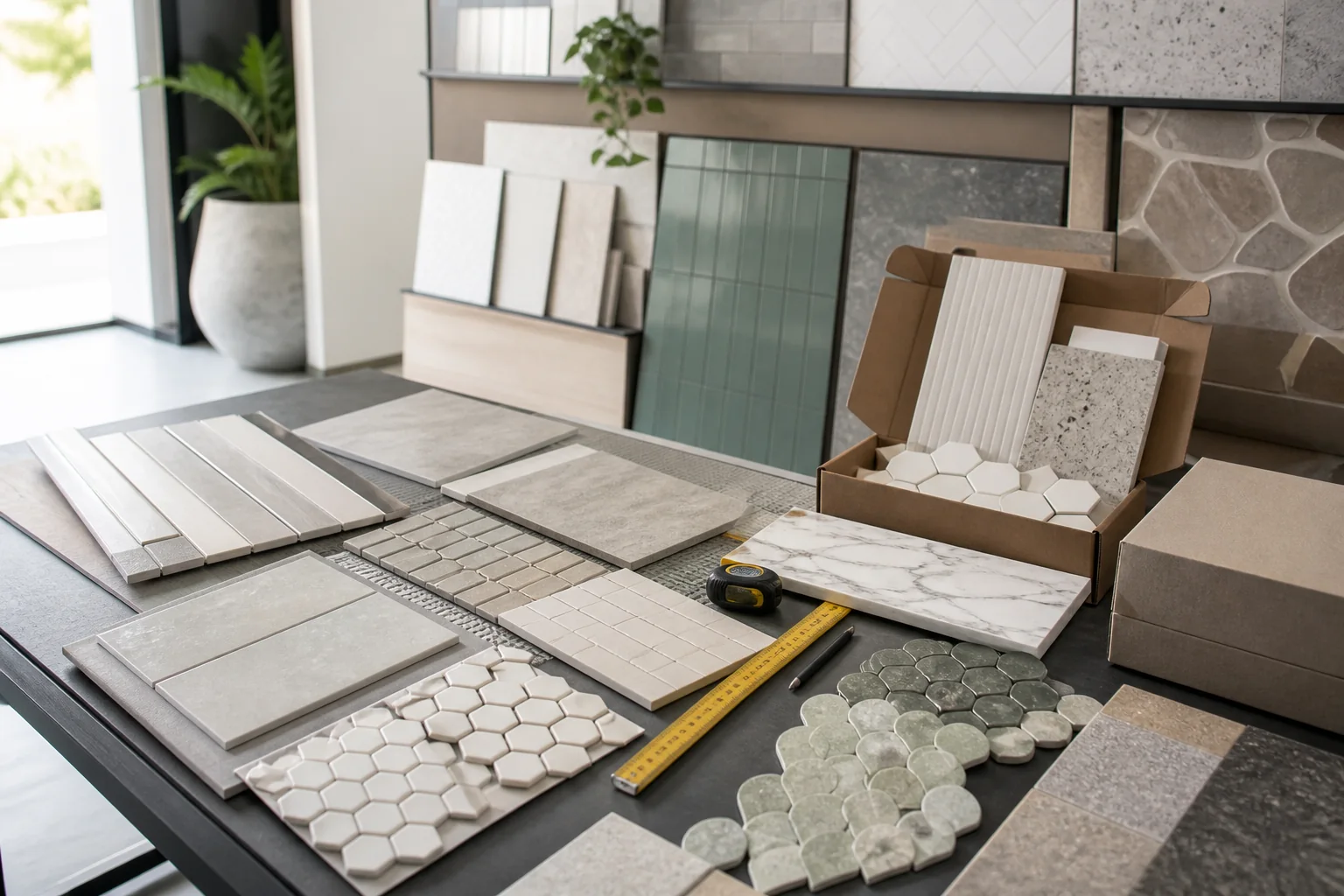
Evaluate tiles and tiling patterns, colours and design guide for Australian projects by checking intended use, product evidence, dimensions, installation, mai.
2026-09-10

Evaluate Hafele products Australia for Australian projects by checking intended use, product evidence, dimensions, installation, maintenance, delivery and sup.
2026-09-14
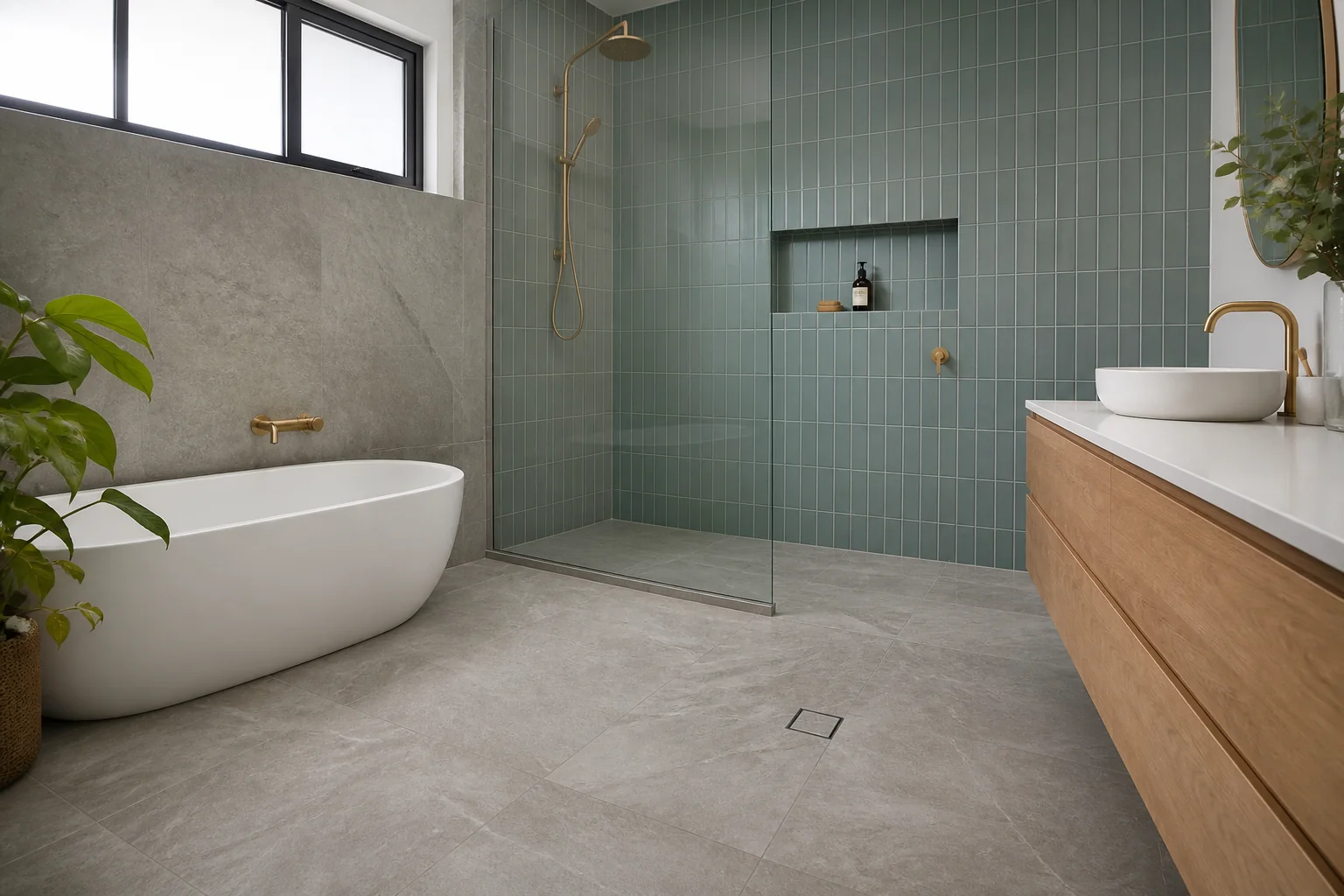
Evaluate bathroom tiles installation and substrate guide for Australian projects by checking intended use, product evidence, dimensions, installation, mainten.
2026-09-18