Floor tiles should be selected for the room’s traffic, water, contaminants, cleaning and substrate—not colour alone. Confirm product classification, slip information, size, finish, joints, installation system and replacement stock before ordering.
| Area | Main selection questions |
|---|---|
| Entry | Tracked grit, wet shoes, cleaning and transition height |
| Living area | Wear, glare, acoustics, furniture and underfloor heating |
| Kitchen | Grease, dropped objects, stain removal and cabinet sequence |
| Bathroom | Wet slip, falls, drainage, waterproofing and small cuts |
| Garage | Vehicle loads, tyres, oil, impact and substrate moisture |
| Exterior | Weather, drainage, heat, salt, slip and movement |
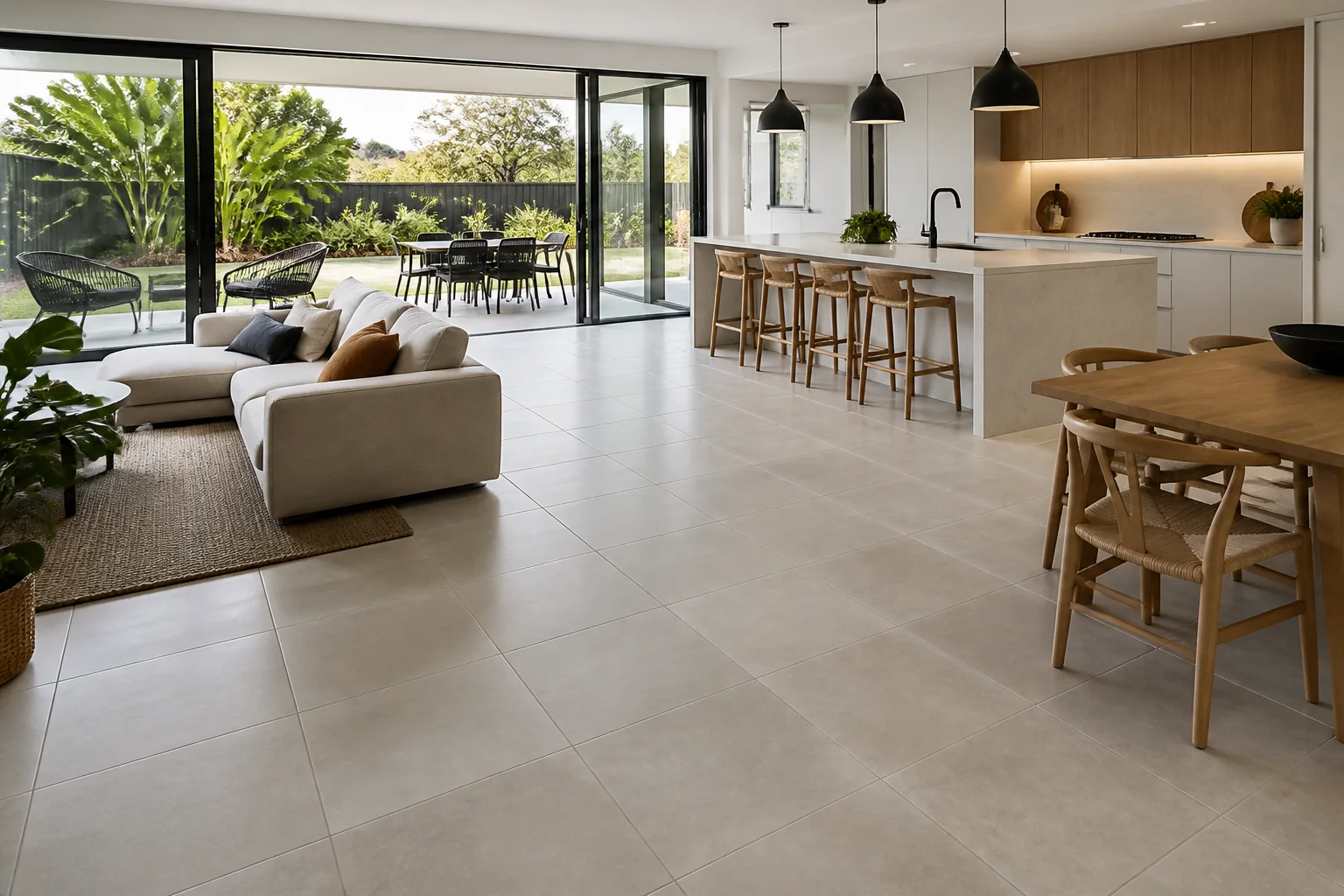
Glazed ceramic offers broad design options but must be documented for the floor location. Porcelain products include low-absorption options for many interior and exterior applications. Natural stone brings individual variation and may require sealing and material-specific maintenance. Product documentation, not appearance, determines suitability.
The Australian Tile Council lists AS 4586 for new pedestrian surface slip classification and AS 4663 for existing surfaces. Select performance for the actual location with the responsible designer. A rough appearance is not a test result, and poor cleaning can change service conditions.
Test common soil, water marks and cleaners on a sample. Highly polished floors can emphasise glare and debris; deep textures may hold dirt. The easiest finish to maintain is the one matched to realistic use and an agreed cleaning method.
Small formats follow curves and falls but create more grout. Large formats reduce joints but need flat substrates, handling and planned cuts. Draw the layout through doorways, drains, cabinetry and room centres. Confirm actual dimensions, calibre, joint width and movement joints.
AS 3958 and product instructions guide ceramic and stone tile installation in Australia. Use current project-specific advice.
Not automatically. Compare the exact product’s classification, finish and intended location.
Larger formats and quieter grout can reduce visual breaks, but the best size also needs balanced cuts and a suitable substrate.
Appearance alone cannot determine slip. Use relevant test information for the location.
Base the allowance on layout, cuts, pattern, breakage and spare needs, then round up to whole cartons.
Sometimes, after a project-specific assessment of adhesion, levels, movement, moisture and compatibility.
Send room areas, drawings, exposure, preferred look, quantity and destination through the Forge contact page.
Evidence boundary: General guidance only; verify standards and the complete floor system for the project.
Choose floor tiles by comparing room use, slip, wear, size, substrate, cleaning, installation and long-term replacement requirements.
2026-08-31
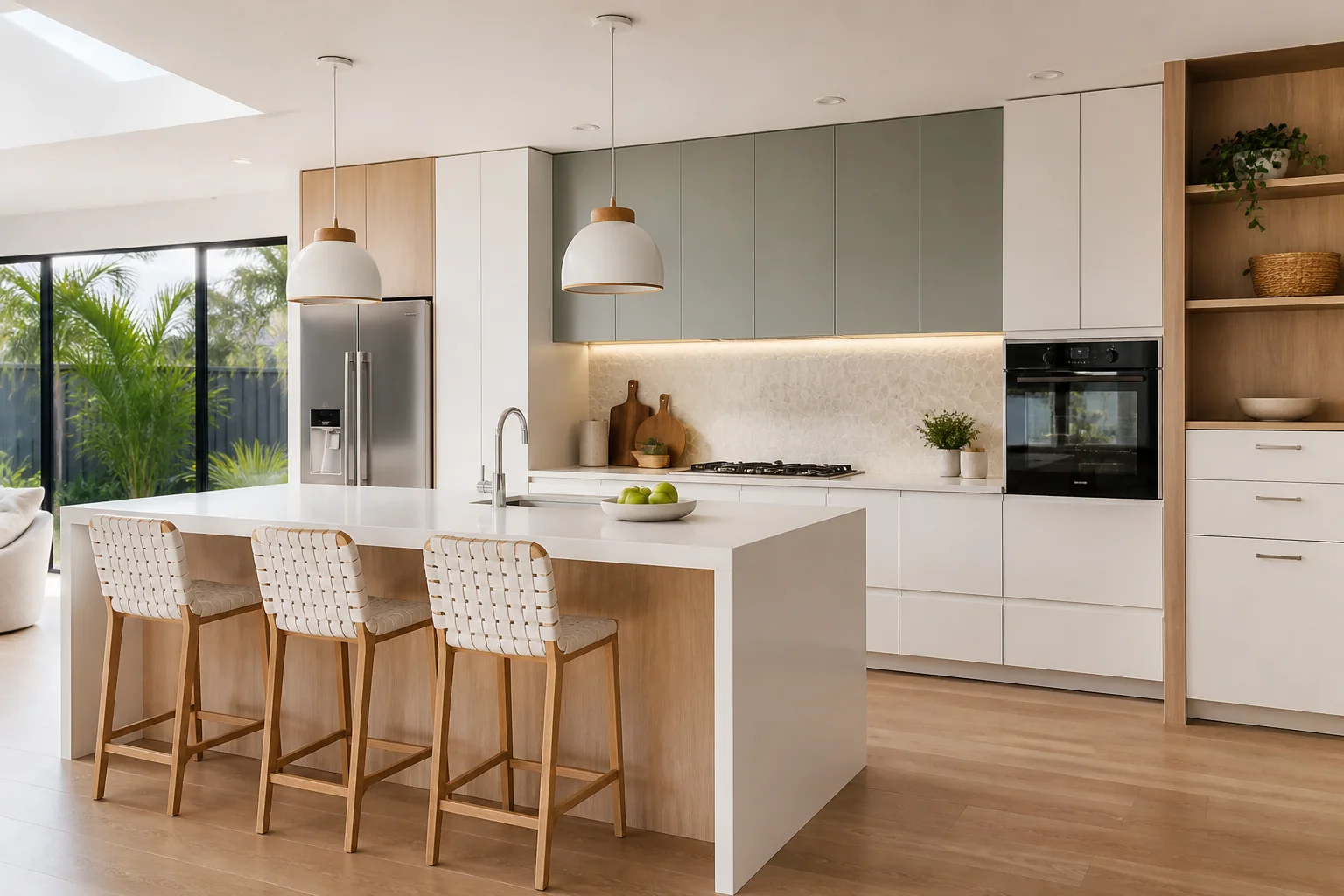
Compare modular kitchen sets by layout, cabinet construction, hardware, appliances, services, delivery, installation and whole-project cost.
2026-09-04
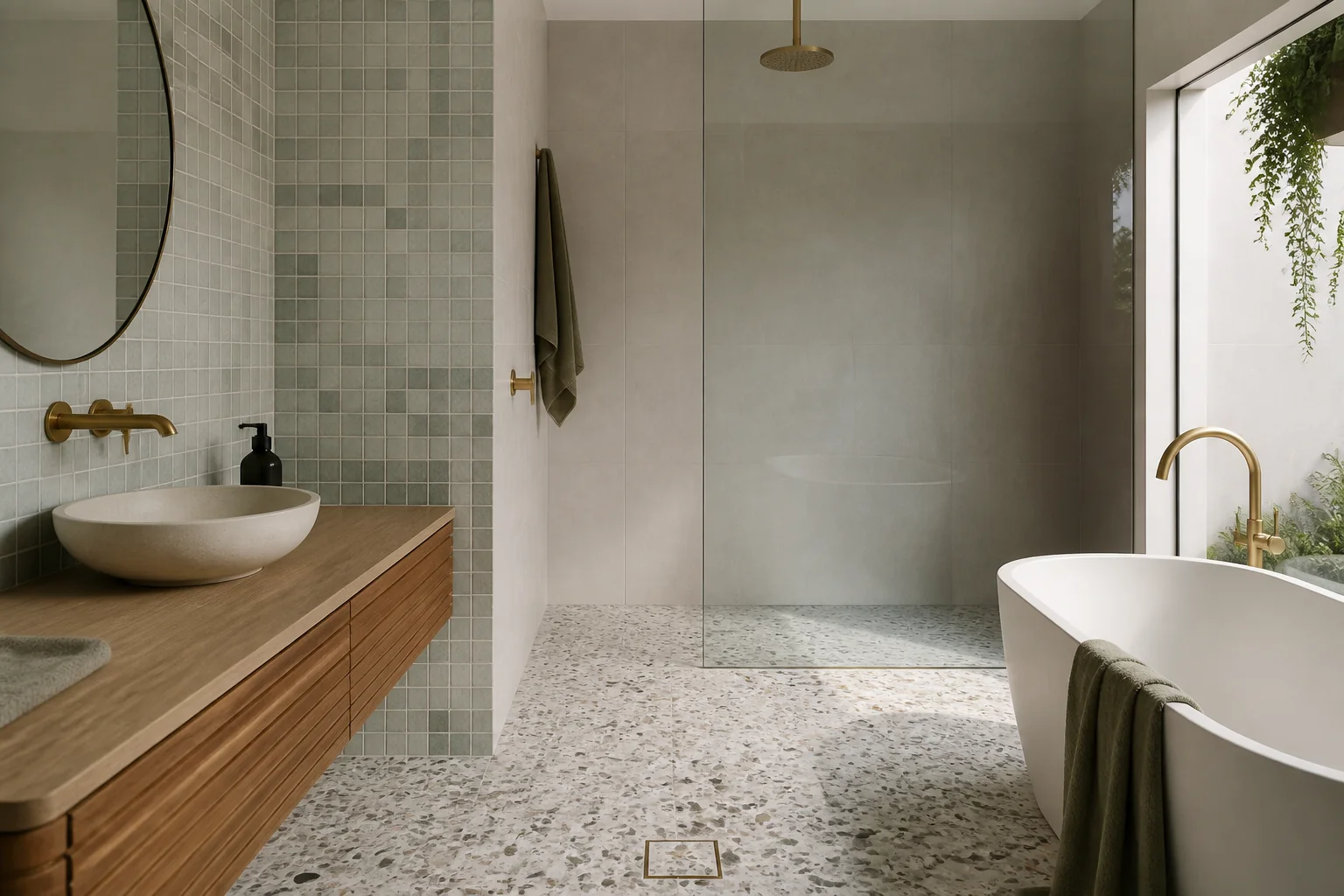
Compare mosaic and terrazzo tiles by composition, sheet layout, aggregate, joints, slip, sealing, substrate, installation, cleaning and repair.
2026-09-08

Evaluate Cotto products Australia for Australian projects by checking intended use, product evidence, dimensions, installation, maintenance, delivery and supp.
2026-09-12
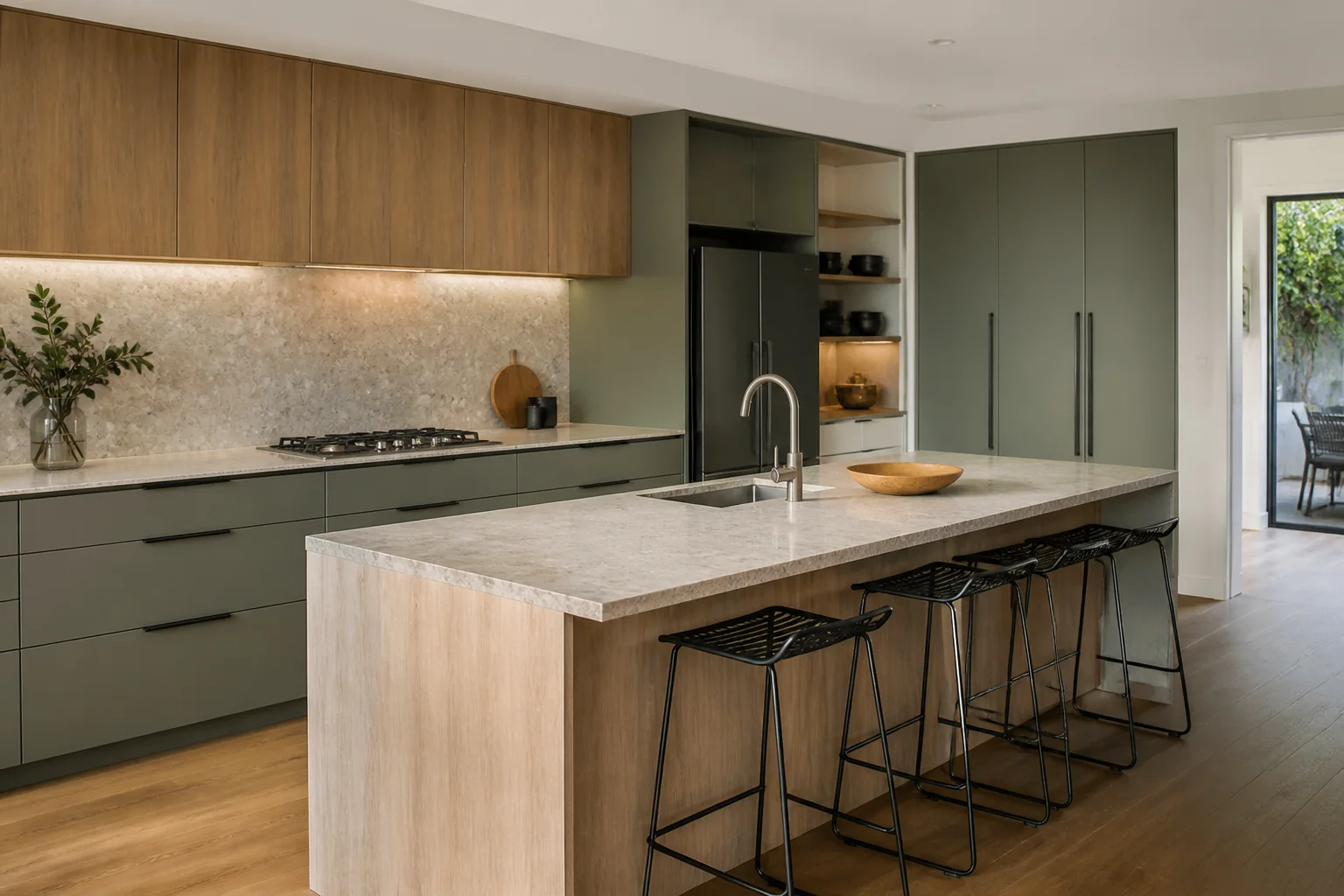
Select kitchen cabinets and modular furniture by comparing storage, carcass, doors, hardware, appliances, services, access and installation scope.
2026-09-16
Evaluate digital door locks and access hardware types, meaning and applications for Australian projects by checking intended use, product evidence, dimensions.
2026-09-20